How to Organize a Small Closet with a Lot of Clothes and Shoes (The Ultimate Guide)
Living in a small home often means making the most of every inch of space. One of the biggest challenges is keeping your closet organized when storage is limited and everyday items quickly start to pile up. A cluttered closet can make your home feel smaller and make it harder to find what you need.
The good news is that with a few smart organization ideas, even the smallest closet can become functional, easy to maintain, and more enjoyable to use. In this guide, we’ll explore simple solutions to help you create more space and bring order to your closet.
You can take control of a crowded closet by clearing out what you don’t wear, grouping items by type, and using vertical space for shoes and folded clothes.
Create a simple system—keep everyday pieces visible, store seasonal or rare items higher or elsewhere, and add shelves, hooks, and shoe organizers to use every inch.
Key Takeaways
- Decide what to keep and what to move out to free immediate space.
- Use vertical storage, uniform hangers, and smart shoe racks to maximize capacity.
- Set a simple daily habit to keep the closet tidy and functional.
Identifying Underutilized Areas
Measure the depth, height, and width of shelves and hanging rods. Check the top shelf above the rod, the back wall, the inside of the door, and the floor corners. These spots often hold empty vertical space or awkward gaps you can exploit.
Look for wasted depth on shelves where clothes fall forward. Add shallow bins or shelf dividers to keep stacks neat. Use the top shelf for boxes labeled by season, not loose piles, so you actually reach them.
Don’t ignore the door. A slim shoe organizer or hooks add storage without changing the layout. Corners can fit narrow vertical shelving or a slim rotating rack for shoes or bags.
Setting Functional Zones
Group items by how you use them: daily workwear, workout clothes, weekend outfits, and shoes. Place daily items at eye level and within reach; store seasonal pieces on higher shelves or under the bed.
Create a shoe zone using clear boxes or multi-tier racks. Keep frequently worn shoes on the lower shelf or floor; store dress shoes in dust bags higher up. Use labeled bins for belts, scarves, and small accessories so they don’t mix with clothes.
Designate a grab-and-go spot for one complete outfit or bag you wear often. That reduces decision time and keeps high-traffic items from cluttering the rest of the closet.
Decluttering Strategies
You will sort items so every piece has a clear place, rotate seasonal pieces to free space, and move unwanted items out quickly. These steps cut daily decision time and free room for clothes you actually wear.
Sorting by Category
Start by removing everything from the closet and placing similar items together: tops, pants, dresses, jackets, shoes, and accessories. Lay shoes in a row on the floor so you can see duplicates and unworn pairs at a glance.
For each category, use a quick rule: if you haven’t worn it in 12 months, it goes into a “maybe” pile. Try each “maybe” item on. If it doesn’t fit, feel good, or match other pieces, move it to donate or sell. Keep only the items you wear regularly or that fit specific needs (work, formal events, sports).
Use clear bins or labeled boxes for small accessories and seasonal footwear. That prevents mixing and makes it obvious what you own.
Seasonal Rotation
Decide on two sets: current season and off-season. Store the off-season set in vacuum bags, under-bed boxes, or high shelves to free hanging and shelf space now. Put bulky winter coats and boots away during summer, and swap them back when temperatures change.
Label each storage container with the season and contents, like “Winter coats + boots.” Keep a small capsule of transitional items (light jacket, neutral shoes) accessible during changeover weeks. Rotate twice a year and inspect packed items for damage before storing them again. This keeps your most-used items visible and reduces clutter.
Donating or Selling Items
Create three piles: donate, sell, recycle. For items in good condition but no longer wanted, photograph them quickly and list them on a local app or marketplace with honest descriptions and clear prices. Price common items competitively to sell faster.
Take donation-ready items to a drop-off center within a week to avoid reintroducing clutter. Recycle damaged textiles or use them as rags. Keep receipts for donated clothing if you want tax records. Make the removal step non-negotiable: schedule a pickup or set a calendar reminder so items leave your home promptly.
Optimizing Hanging Solutions
Good hanging choices free up floor and shelf space, keep clothes visible, and cut the time you spend digging for outfits. Focus on adding usable hanging rows, picking hangers that match your clothing, and using hanging organizers for small items.
Utilizing Double Hanging Rods
Install a second rod about 40–45 inches below your top rod for shirts, skirts, and folded pants. This creates two full-length hanging zones and often doubles your usable hanging space without a major remodel.
Measure first. Use a tension rod for a quick install or a mounted rod for heavier loads. Place the lower rod high enough so shirts hang without touching the floor but low enough to clear longer items on the top rod. Keep long dresses and coats on the top rod at one end, not mixed with the double-rod area.
Use matching rods and sturdy brackets so the lower row holds weight. Group similar items—work shirts on one side, casual tops on another—to make outfits faster to find.
Choosing the Right Hangers
Pick hangers that match the garment type: slim velvet for shirts, wooden for heavy coats, and clip hangers for skirts and trousers. Slim velvet hangers save space and stop slipping, which keeps your closet neater.
Keep hanger color and style consistent. That small change makes your closet look ordered and prevents garments from catching on different shapes. Replace bulky plastic hangers with slim, strong options to gain several inches per row.
Use specialty hangers where useful. Cascading hooks let you hang multiple items vertically and save horizontal space. Use trouser hangers with clips that have non-slip padding to avoid creasing.
Incorporating Hanging Organizers
Choose 6–8-cube hanging shelves for folded knits, hats, and swimsuits. These suspend from the rod and create clear places for smaller items you can’t stack on shelves.
Use hanging shoe organizers with clear pockets for flats and sneakers. They keep shoes visible and off the floor. For accessories, install a hanging pocket organizer behind the closet door or on the side wall to hold belts, scarves, and jewelry.
Label the front of fabric bins or clear pockets so you can grab items fast. Rotate seasonal hanging organizers—store winter sweaters in a bin during summer to free up space for current clothes.
Shoe Storage Innovations
Use vertical space, choose slim adjustable racks, and pick sliding or over-the-door solutions that fit your closet depth and door type. Focus on shoe visibility, easy access, and protecting soles and heels.
Maximizing Vertical Space
Stack shoes upward on wall-mounted shelves or tiered cubbies to free floor space. Install floating shelves at different heights so you can store flats, sneakers, and boots separately. Put less-used seasonal shoes on the top shelves and daily pairs within arm’s reach.
Use clear, labeled boxes on higher shelves so you can find specific pairs without pulling everything down. Add narrow pegboard or a slatted wall panel to hang sandals and flats by hooks. If you have 8–12 inches of vertical clearance under an existing shelf, add a small, slim shoe shelf to double that area.
Selecting Compact Racks
Pick racks that match the types of shoes you own. Slim metal shoe towers work well for many sneakers and casual shoes. Stackable cubes fit dress shoes and can be rearranged as your collection changes.
Look for adjustable-width racks if you have bulky boots or wide trainers. Choose open designs so air circulates and shoes dry. Lightweight plastic or wire racks slide in and out easily; hardwood cubbies look nicer and hold shape better. Measure your closet depth before buying so shoes don’t block hangers or the door.
Sliding and Over-the-Door Options
Use an over-the-door organizer with angled pockets for heels and flats if your door swings freely. Opt for a reinforced model if you store heavier boots. For shallow closets, install a sliding shoe rail that pulls out like a drawer — it keeps shoes visible while saving depth.
For closet doors that can’t hold weight, fit a slim sliding rack on the inside wall or add a rail system that mounts to the jamb. Choose rollers with soft stops to protect the frame. If you want easy access, a low-profile pull-out tray holds 6–8 pairs and prevents bending to reach shoes.
Efficient Folding and Shelving Approaches
Use shelving to separate categories, keep daily items visible, and reserve vertical space for shoes. Fold so items stack without toppling and fit bin sizes you already own.
Implementing Shelf Dividers
Place dividers where stacks slide or mix, like between sweaters and jeans. Select thin metal or acrylic dividers that clamp to the shelf or use tension rod dividers for adjustable spacing. Measure shelf depth and height before buying so dividers match your shelf and don’t block access.
Group items by type and frequency: reserve one cubby for heavy sweaters, one for workout clothes, and one for seasonal pieces. Leave 1–2 inches of breathing room so you can pull a stack forward without disturbing others. Label the front edge with small stick-on tags to speed up retrieval.
If you have open wire shelves, add a thin plywood or cardboard liner to prevent knits from snagging. For deep shelves, stagger dividers to form smaller cubbies and stop piles from collapsing.
Space-Saving Folding Techniques
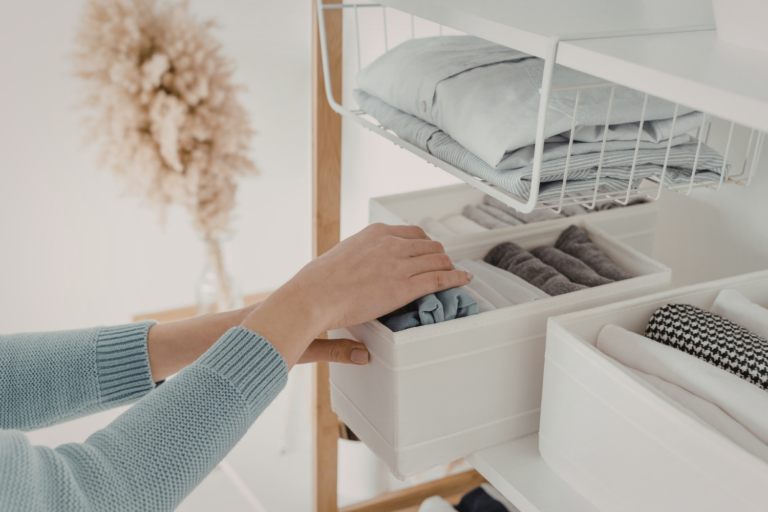
Fold shirts and tees using the file-fold method so you can see each item standing up. Lay the shirt flat, fold sleeves back, fold sides toward the center, then fold into thirds. Store vertically in drawers or bins for easy scanning and less re-folding.
Roll soft items like tees, leggings, and swimwear for tighter packing and fewer wrinkles. Fold jeans and structured pants with a single crease, then stack by size or length. For bulky sweaters, use two quick flat folds to avoid overstretching the neckline.
Keep a small shelf or basket for “ready-to-wear” pieces you use most. Re-fold weekly to prevent permanent creases and keep stacks neat.
Using Storage Bins and Boxes
Use clear plastic bins for off-season clothes so you can see contents without opening them. Pick uniform sizes to make stacked towers stable; label the short side so you can read labels when stacked.
For shoes, use shallow shoe boxes or clear front shoes boxes to protect pairs while letting you spot the right pair. Use slim cloth bins for scarves, belts, and hats; fold or roll items and stand them upright to save space.
Reserve one bin for donation-ready items. Every three months, empty that bin and move items out of your closet to keep volume down. Choose breathable fabric bins for delicate knits to reduce moisture build-up.
Using Accessories to Create Order
Use small tools to make each item easy to find and put away. Pick accessories that fit your closet size and the specific items you own.
Drawer Organizers
Choose shallow fabric or plastic dividers that match your drawer depth so nothing gets lost behind taller items. Arrange sections by type: socks, underwear, belts, and small scarves. Keep like items folded the same way to save space and make retrieval faster.
Label each compartment with a simple tag or removable sticker. That helps you and anyone else put things back correctly. For delicate items, use a section lined with felt or a soft cloth to prevent snags.
If you have one deep drawer, stack clear trays or use a tiered organizer to create levels. This keeps the top layer from swallowing smaller pieces and makes everything visible at a glance.
Hooks for Bags and Scarves
Install slim, strong hooks on the inside of the closet door or along unused wall space. Place hooks at two heights: upper for purses and lower for scarves or belts. That uses vertical space without reducing hanging rod room.
Group similar items on the same hook type—heavy bags on metal hooks and lightweight fabric on plastic or padded ones. Use S-hooks for chain straps so they hang without tangling.
For many thin scarves, add a row of small cascading hooks or a multi-loop hanger. That prevents folding wrinkles and lets you see colors and patterns quickly.
Maintaining an Organized Closet
Keep a short, repeatable plan you can do in minutes. Focus on quick checks, rotating seasonal items, and keeping high-use pieces easy to reach.
Routine Checks
Do a 5–10 minute scan once a week. Look for wrinkled garments, shoes left on the floor, and misplaced hangers. Straighten hangers so all clothes face the same way; this makes gaps and overfull spots obvious.
Wipe shelf dust and vacuum the floor every two weeks. Remove single items that don’t belong in the closet and put them where they go. If a shelf or bin is over 80% full, move less-used items to storage to free space.
Use a small checklist on your phone: hangers aligned, shoes paired, shelves tidy, and one donation bag emptied. Doing these checks fast prevents clutter from building and saves time when you dress.
Habitual Item Rotation
Set a simple rule for seasonal rotation: store off-season clothes in labeled bins on the top shelf or under the bed. Put the current season’s items at eye level and easy reach. This keeps your daily choices relevant and reduces visual clutter.
Schedule a deeper closet edit every three months. Try clothes on quickly; remove anything that no longer fits, is damaged, or you haven’t worn in a year. Regular rotation keeps space usable and helps you notice gaps where storage could improve.
Personalizing Your Closet Space
Make choices that match how you dress and how you use the space. Clear labels, better light, and a few simple décor items can cut time getting ready and keep the closet tidy.
Labeling Sections
Labeling saves time and keeps things tidy. Use clear, short labels like “Work Shirts,” “Casual Tops,” “Seasonal Coats,” or “Daily Shoes.” Place labels at eye level on shelves, bin fronts, or on a hanging rail. Use a label maker, printed cardstock in plastic sleeves, or writable tags tied to baskets.
Group like items together first, then label. For shoes, label by type: “Sneakers,” “Heels,” “Boots.” For clothes, you can label by function, color, or frequency of use—pick one system and stick to it. Re-label at season change so the system stays accurate.
Keep labels simple and readable. Use contrasting colors (dark text on light background). If children share the closet, add small icons or photos for quick recognition.
Adding Lighting
Good light helps you find items and judge colors. Install LED strip lights under shelves, battery-operated puck lights above shoe cubbies, or a bright overhead fixture with a warm 3000K–3500K bulb. Choose dimmable or motion-sensor options to save power and avoid fumbling in the dark.
Place lights to reduce shadows: run strips along the front edge of shelves and inside cabinets. Aim for at least 200–300 lux at eye level so fabrics show true color. For narrow reach-ins, a single ceiling LED plus shelf strips works well.
Use daylight-balanced bulbs for accurate color matching when you pick outfits. Make sure wiring follows safety rules; use battery or plug-in fixtures if you cannot rewire.
Incorporating Decorative Touches
Decor keeps the closet inviting and helps you maintain order. Add a slim rug for comfort and to define the space. Use matching baskets or coordinated bins to hide small items and create a cleaner look. Choose neutral tones so your clothes remain the focus.
Mount a small mirror on the inside door or a full-length, narrow mirror if space allows. Hang a pretty hook or two for frequently used bags or scarves. Add a small plant or framed photo on an upper shelf if ventilation and light let it survive.
Keep decorative choices functional. For example, pick baskets with labels, hooks with a small shelf above them, or a bench that doubles as shoe storage. Simple, durable items maintain the tidy look without clutter.
Frequently Asked Questions
How do I declutter and sort a closet that’s overstuffed with clothes and accessories?
Take everything out and sort items into keep, donate, mend, and toss piles. Try garments on if you’re unsure; only keep items that fit, you wear regularly, or have clear future use.
Group keepers by type and color when you put them back to make outfits faster to find. Limit each section (e.g., shirts, pants, dresses) to a set number of hangers or shelf space to prevent reseeding clutter.
Use small bins or drawer dividers for accessories and label them. Set a periodic habit—every three months—review items and move unused pieces to donate so the closet stays manageable.
What are the best ways to store and organize shoes in a tight closet?
Put daily-use shoes on a low rack or shoe cubby at the closet base for fast access. Stackable clear shoe boxes show contents and protect pairs while saving floor space.
Mount an over-the-door shoe organizer for flats and sandals to free up shelf space. For boots, use boot shapers and store them upright on a narrow shelf or in a tall bin to keep shape and save room.
Rotate shoes seasonally and store off-season pairs in vacuum-seal bags or under-bed boxes to reduce clutter. Label boxes or clear fronts so you can find pairs quickly.
How can I maximize hanging space in a very small closet?
Install a second rod at knee height to double hanging capacity for shirts, skirts, and pants. Use slim, non-slip hangers so more garments fit without slipping.
Hang longer items like coats on one side and shorter items like tops on the other to create space for a lower rod. Add a hanging shelf or cascading hooks for scarves, belts, and purses.
Use a tension rod inside the closet door for lightweight items or seasonal rotation. Consider a removable wardrobe rail if you need temporary extra hanging room.